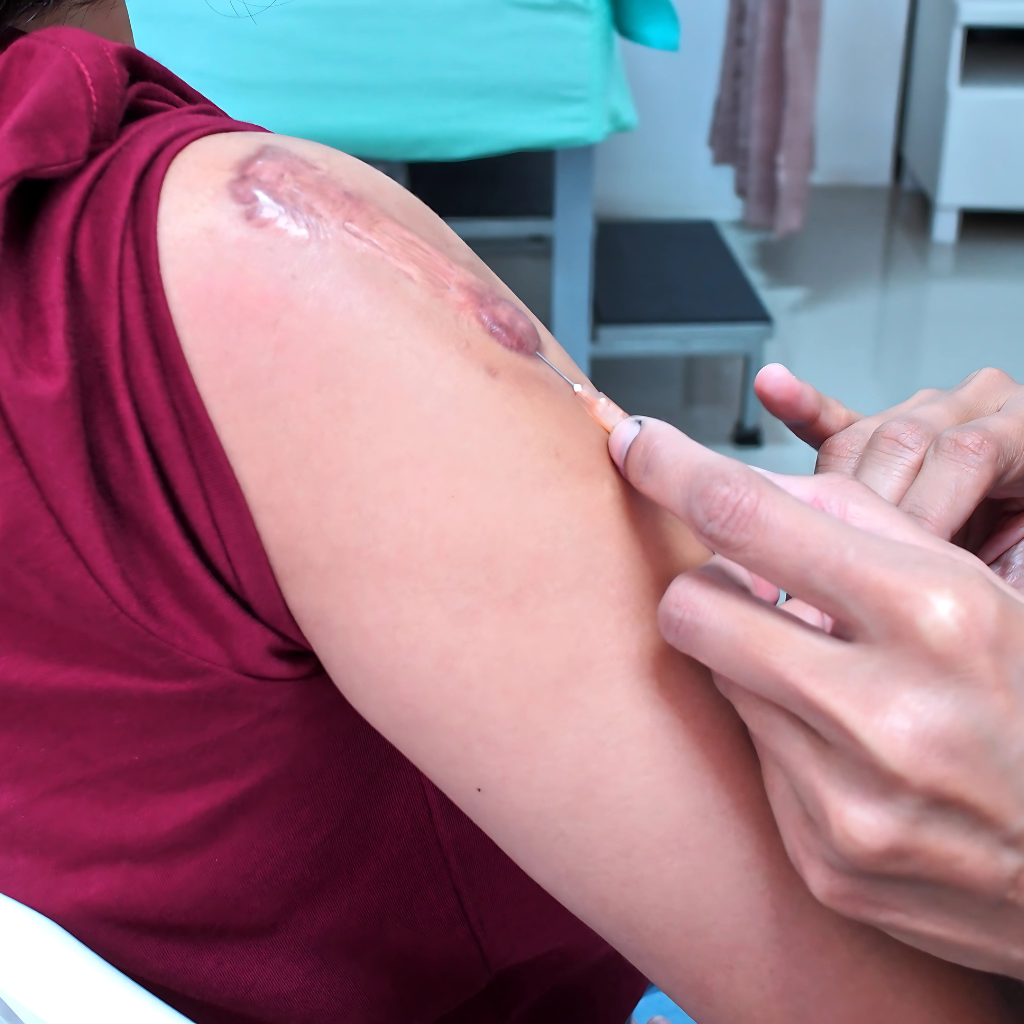
Some medicines are injected into keloids by clinicians. Suitability and side effects depend on the medicine and the individual scar.
A clinician can explain which symptoms or scar changes a treatment may address.

Learn how keloid scars develop and why they may grow beyond the original injury.
About Keloids
Learn about treatment approaches, their limitations and the possibility of recurrence.
View Treatment Options

Keloids enlarge on ears; surgery distorts pinna shape. Non-surgical combo protocol reduces keloids while preserving the ear’s natural contour.
Face has hair and oil glands, triggering keloids. Mustache and beard keloids need urgent care. Steroids worsen acne and keloids.
Neck movement and beard hair can cause keloids on burn scars; laser beard hair removal is often necessary to prevent their formation.
Male chest hair and acne, and female breast traction, trigger issues; managing factors is crucial, with laser hair reduction as supportive treatment.
Old BCG vaccine scars may turn into keloids many years later, with traction serving as an important trigger factor for their development.
Acne on the back of the neck or scalp can form keloids, called Acne Keloidal Nuchae, sometimes requiring complete removal of affected scalp.
Some medicines are injected into keloids by clinicians. Suitability and side effects depend on the medicine and the individual scar.
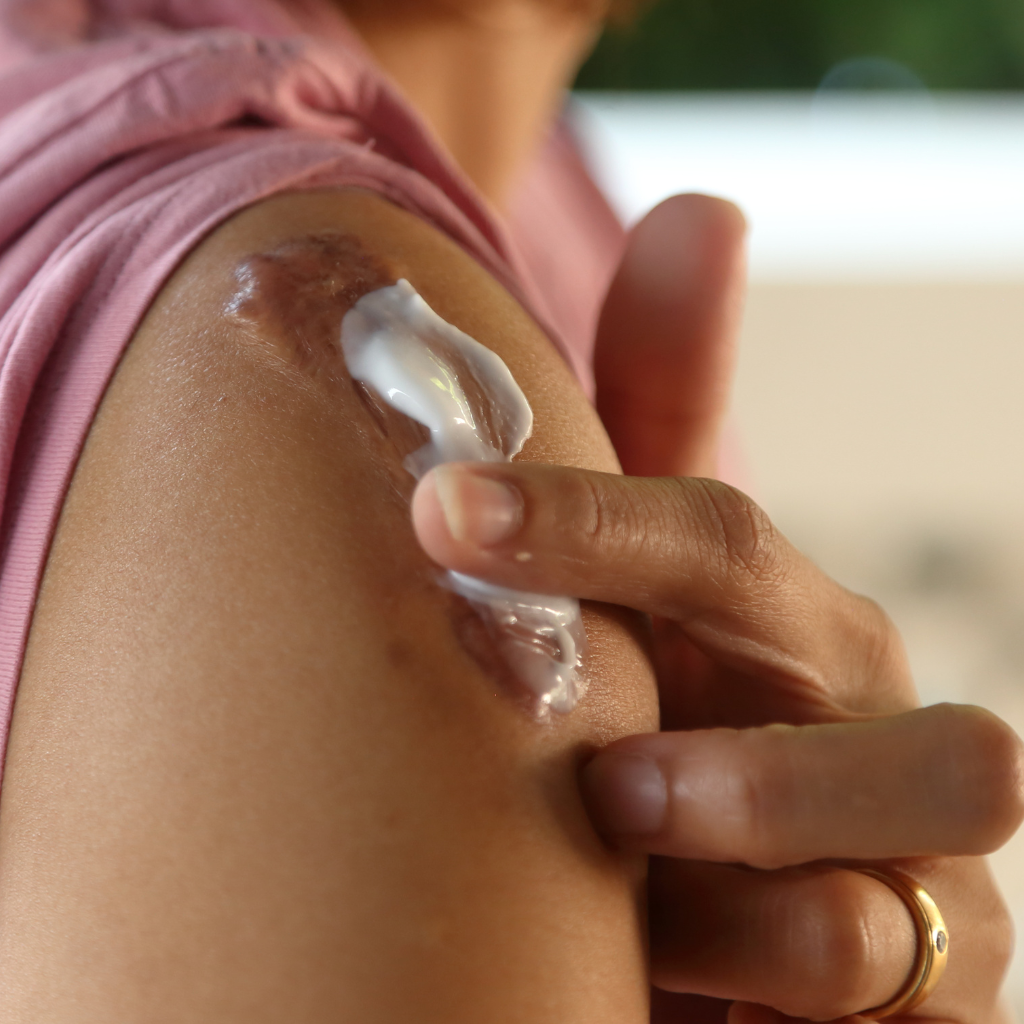
Silicone gels and sheets are among the options used in scar care. Ask a clinician about their limitations and possible skin irritation.
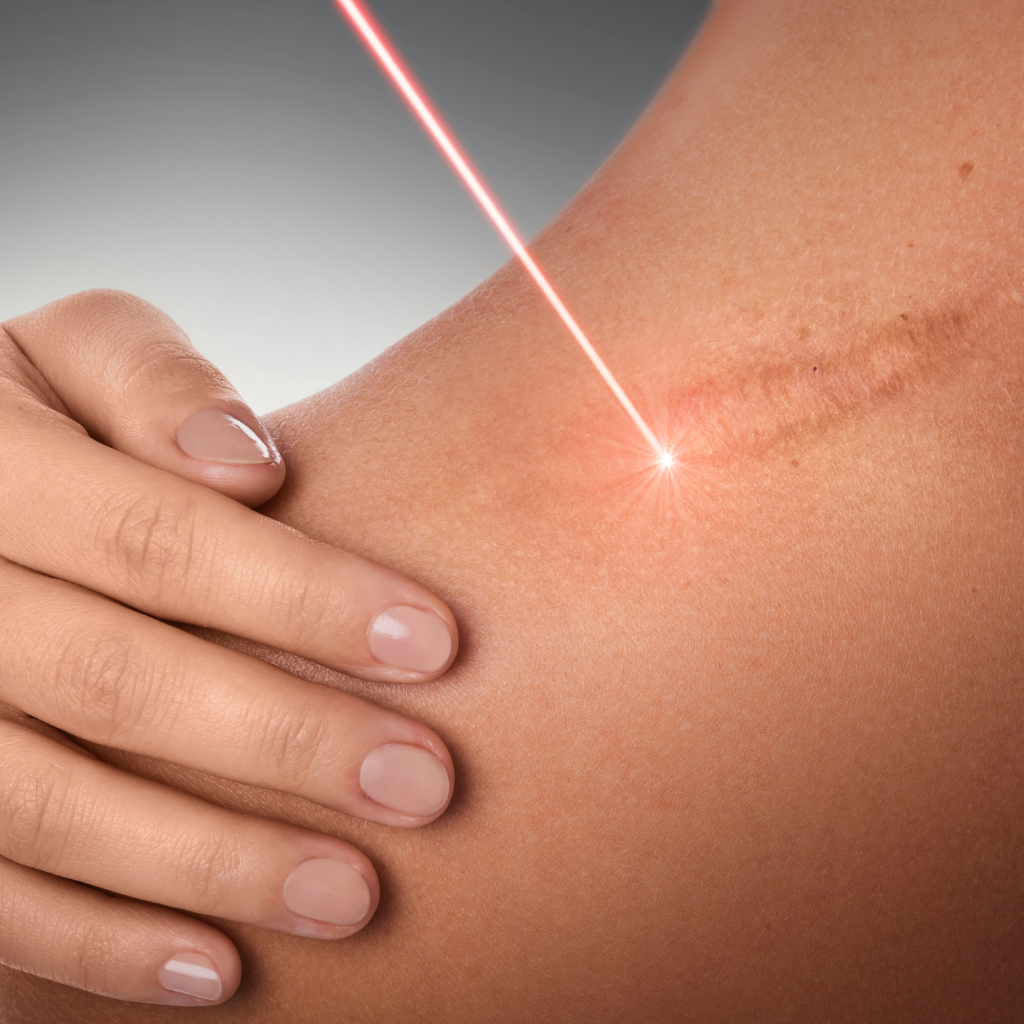
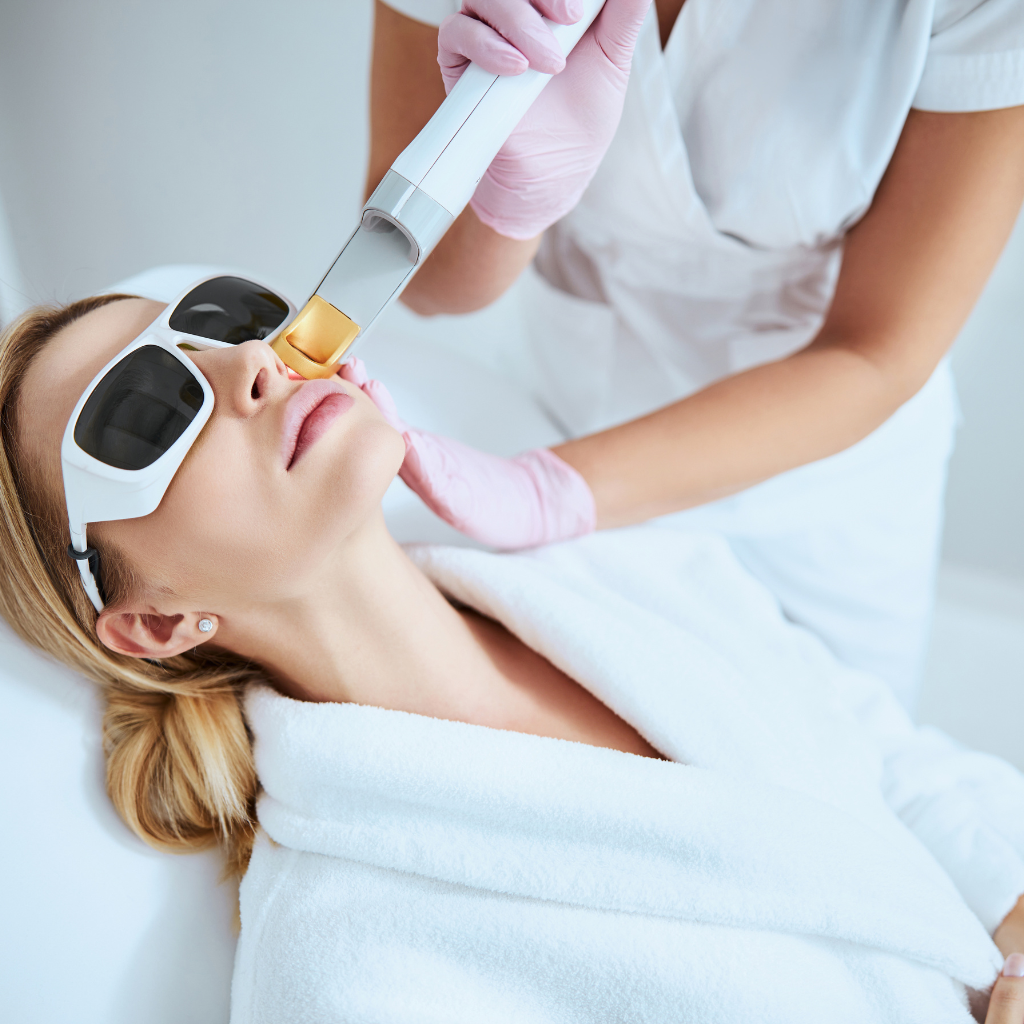
Fractional CO₂ laser may be considered for selected scars. Possible side effects include temporary redness and changes in skin colour. Keloids may recur.
Keloids are more than just scars—they are overgrown, raised masses…

Walk into any pharmacy or browse online, and you’ll see…
For many years, keloids have been one of the most…